Fabric Math

Thread count
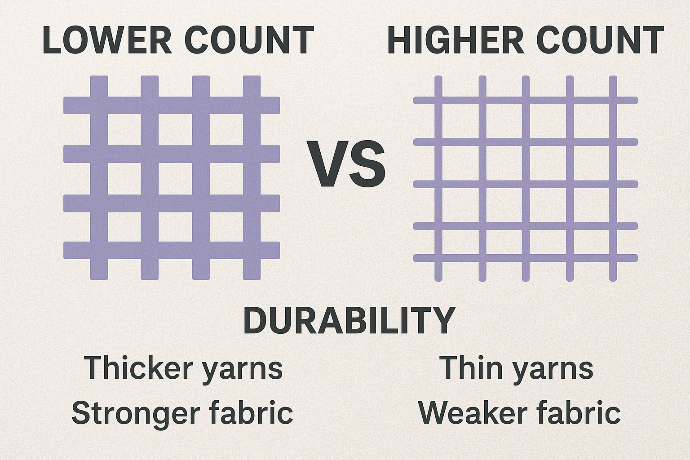
| Thread Count | Feel | Use |
| 40–60 | Thick, durable | Upholstery, shirts |
| 80–100 | Medium soft | Dresses, premium shirts |
| 120–200+ | Luxurious, fine | High-end bedding, suits |
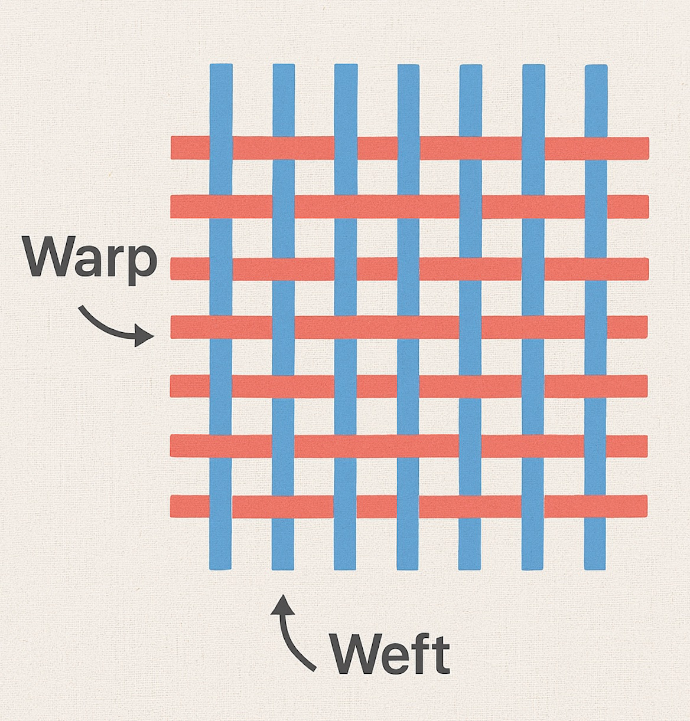
Warp and Weft
EPI (Ends Per Inch)
PPI (Picks Per Inch)
If a cotton fabric has:
EPI = 100, and
PPI = 80
then the fabric count = 100 × 80
This means it’s a tightly woven fabric, likely smooth and strong.
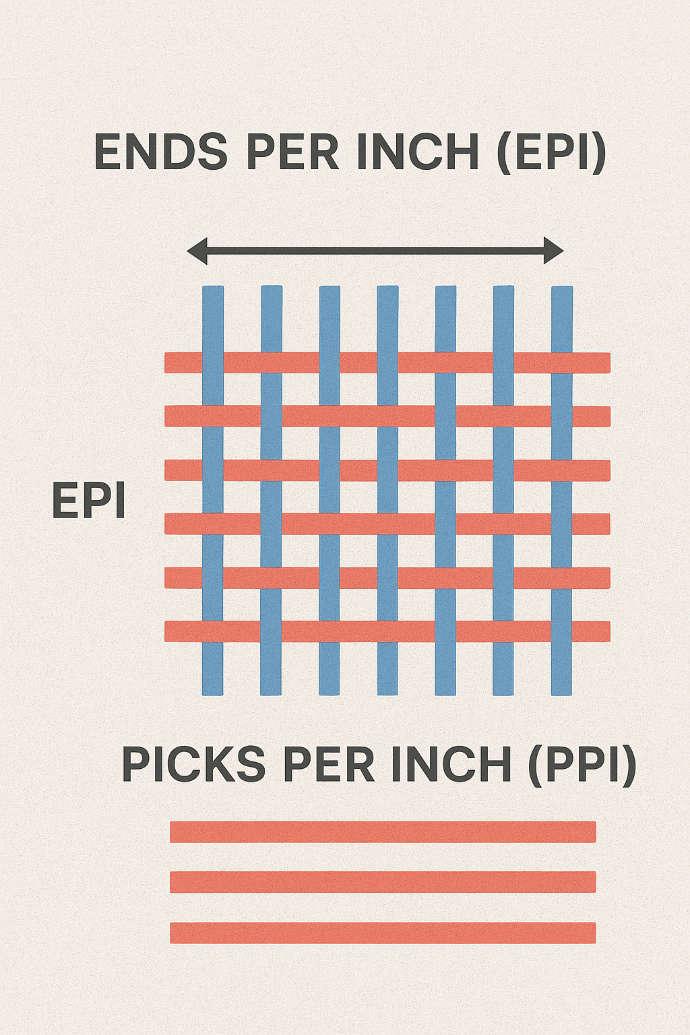
Example: If a fabric has 60 weft threads in one inch, it’s called 60 PPI.
EPI (Ends Per Inch) The number of warp threads (the vertical ones) in one inch of fabric width.
“Ends” means the warp yarns.
PPI (Picks Per Inch) The number of weft threads (the horizontal ones) in one inch of fabric length.
“Picks” means the weft yarns.
| Property | EPI (Ends per Inch) | PPI (Picks per Inch) |
|---|---|---|
| Direction | Warp (Lengthwise) | Weft (Crosswise) |
| Indicates | Warp thread density | Weft thread density |
| Unit | Threads per inch | Threads per inch |
| Affects | Strength, smoothness | Flexibility, softness |
| Controlled by | Loom setting (reed) | Shuttle/Weft insertion speed |
Thread Density
EPI = 120, and
PPI = 100
Then:
Thread density = 220 threads per inch (TPI)
Fabric count = 120 × 100 = 12,000 intersections per square inch
This means it’s a fine, tightly woven, smooth fabric — like high-quality bedsheets or shirting cotton.
High vs Low Thread Density
| Thread Density | Fabric Type | Characteristics |
|---|---|---|
| Low (e.g., 40×40) | Muslin, canvas | Loose weave, breathable, rougher |
| Medium (e.g., 80×60) | Regular cotton | Balanced strength & comfort |
| High (e.g., 120×100) | Fine cotton, poplin | Smooth, durable, refined |
| Very High (e.g., 200×200) | Luxury sateen/sheets | Silky, dense, soft |
GSM in Fabric
How thick or thin a fabric is
How durable or breathable it will feel
What the best use of the fabric is (summer shirt vs winter hoodie)
If a 1m × 1m piece of fabric weighs 150 grams,
GSM = 150
It measures the weight of the fabric — not its thickness directly, but how heavy or dense it is per square meter of area.
GSM tells you how heavy or light a fabric feels.
GSM helps you understand:
GSM = weight of fabric in grams ÷ area of fabric in m²
GSM = Weight (g) / Area (m²)
| Fabric Type | Typical GSM | Feel / Use |
|---|---|---|
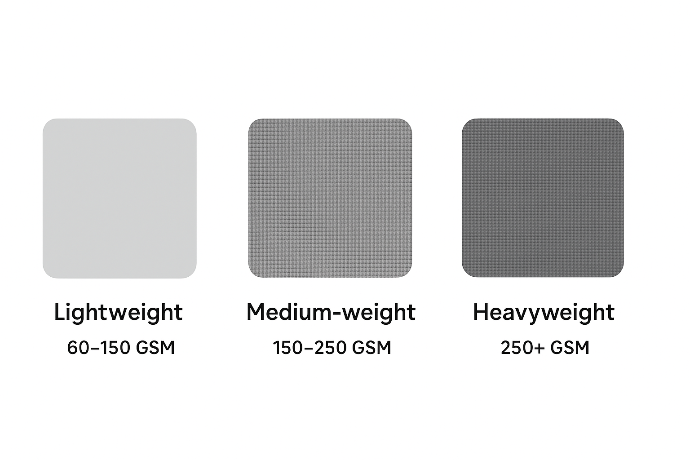
| Lightweight fabrics | 60–150 GSM | Soft, airy – shirts, blouses, lining |
| Medium-weight fabrics | 150–250 GSM | Durable – trousers, dresses, T-shirts |
| Heavyweight fabrics | 250–450+ GSM | Thick, warm – denim, jackets, upholstery |
| Knitted fabrics (T-shirts, hoodies) | 120–300 GSM | Varies with thickness & warmth |
| Bedsheets / cotton sateen | 100–250 GSM | Soft, breathable, smooth |